
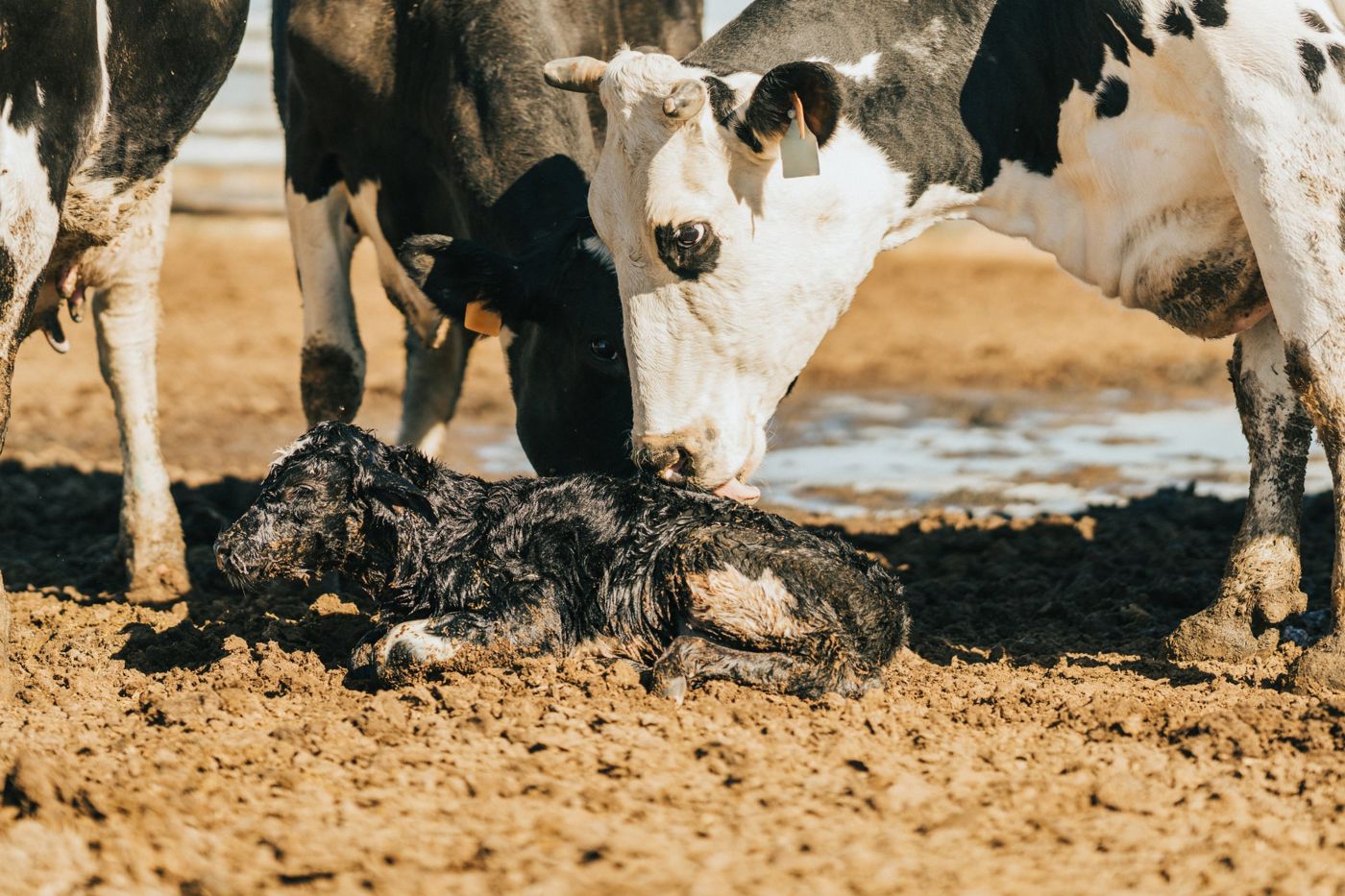
The calving interval is the time between two consecutive calvings of the same cow. It is the sum of days open and gestation length. The usual target is 12 to 13 months, that is, between 365 and 395 days.
What the calving interval is
It is the indicator that sums up reproductive efficiency over time: how often a cow delivers a calf and starts a new lactation.
It is abbreviated CI. Unlike days open, which you can see today, the actual CI is only known once the cow calves again. That is why the projected CI, estimated from current data, is also used.
How it is calculated
A cow has 128 days open when she becomes pregnant.
Projected CI: 128 + 283 = 411 days, about 13.5 months.
At that pace, the cow produces 365 ÷ 411 = 0.89 calves per year instead of one.
What the target is
Common benchmarks:
One calving every 12 to 13 months.
Review days open.
Sustained loss of calves and milk.
In beef operations the goal is one calving per cow per year. In very high-producing dairies, some systems accept somewhat longer intervals by design; what matters is that it is a decision and not an oversight.
Why it gets longer
Since gestation length barely changes, the interval gets longer in only one way: days open. Anything that delays the next pregnancy stretches it by the same number of days.
- Undetected heats or late services.
- Low conception, which forces repeat services.
- Abortions, which restart the count.
- Post-calving problems or poor body condition score.
How to shorten it
- Work on days open. It is the only part of the interval you can manage.
- Track the projected CI, not just the actual one: the actual figure arrives when it is too late to correct.
- Identify the cows that push it up the most. A few cows with many days open move the average for the whole herd.
- Record abortions and their probable causes.
The days open guide explains in detail how to reduce them.
Frequently asked questions
What is the difference between the actual and the projected CI?
The actual CI is calculated between two calvings that have already happened. The projected CI estimates when the next calving will be based on current days open, and lets you act sooner.
Is a shorter interval always better?
Not necessarily. Below 12 months, the cow would have to become pregnant very soon after calving, when her fertility is still low.
How does it affect milk production?
With long intervals, the cow spends more time in late lactation, when she produces less milk per day.
Is it calculated per cow or per herd?
Both. Per cow, it helps with individual decisions; the herd average shows the overall trend.
Related terms
This guide is for informational purposes and uses general benchmarks. Each operation's targets and treatments should be set with its veterinarian or advisor.