
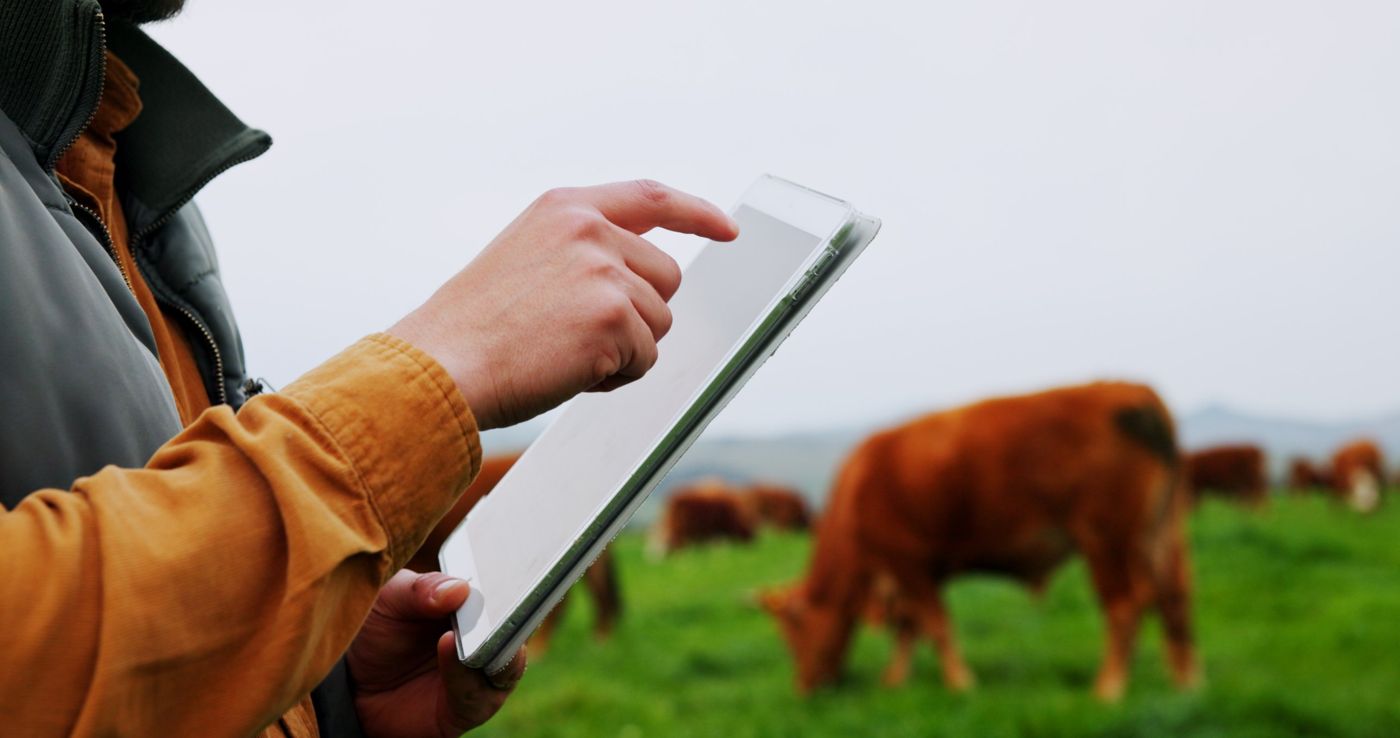
Keeping cattle records means writing down, in an organized way, what happens to each animal and each paddock: calvings, services, production, treatments, weigh-ins, and movements. With a unique ID per animal and the habit of recording the same day, data turns into decisions.
Why keep records
Without records, the operation is run from memory. That works with a few animals, but it breaks down when the herd grows or the person in charge changes.
- To decide: which cow to breed, which to dry off, which to cull.
- To plan ahead: upcoming calvings, dry-offs, and vaccinations.
- To know if you're making money: what it costs to produce and what each animal returns.
- To prove it: traceability for buyers, certifications, and audits.
What to record
You don't need to start with everything. This is the order we recommend:
- Identification. A unique number per animal, date of birth, sex, breed, and sire and dam if known.
- Reproduction. Heats, services, pregnancy diagnoses, calvings, abortions, and dry-offs.
- Production. Milk per cow or per herd, and weigh-ins for beef and replacement cattle.
- Health. Vaccines, treatments, dewormings, and withdrawal times.
- Movements. Purchases, sales, deaths, and group changes.
- Paddocks. Grazings, rest periods, pasture measurements, and fertilizer applications.
- Costs. Feed, inputs, labor, and services.
How often to record
The rule is simple: the event is recorded the day it happens. Whatever is left for the weekend gets forgotten or written down with the wrong date.
Calvings, services, treatments, and herd milk.
Cows to breed, to confirm, and to dry off.
Individual milk, weigh-ins, and pasture measurements.
From notebook to system
Any method is better than none, but each has its ceiling:
- Notebook. Easy to start. It calculates nothing and sends no alerts, and the data sits in a single physical place.
- Spreadsheet. Lets you sort and total. It becomes fragile as the animals, the formulas, and the people touching it multiply.
- Cattle management software. Each data point is recorded once and feeds indicators, alerts, and work lists. Several people can work at the same time.
If you already have a spreadsheet, it isn't lost: most systems let you import it.
Common mistakes
- Duplicate or changing IDs. Without a unique number, the animal's history splits in two.
- Recording late. Approximate dates ruin reproductive indicators.
- Recording without reviewing. A record nobody looks at changes no decision.
- Depending on one person. If only one person understands the notebook, the data is lost when that person is away.
- Trying to record everything from day one. It is better to start with the basics and keep it up.
Frequently asked questions
Where do I start if I have nothing?
With each animal's identification and the reproductive events: calvings and services. That alone is enough to calculate the most important indicators.
How much time does it take per day?
Once the habit is formed, a few minutes. Time is lost when events pile up to be recorded later.
Can I move my data from Excel to software?
In most cases, yes. IdeasFarm includes an Excel template for importing the entire herd.
Who should do the recording?
Whoever sees the event. Ideally, the person in the field records it on the spot and someone reviews once a week.
Related terms
This guide is for informational purposes and uses general benchmarks. Each operation's targets and treatments should be set with its veterinarian or advisor.