
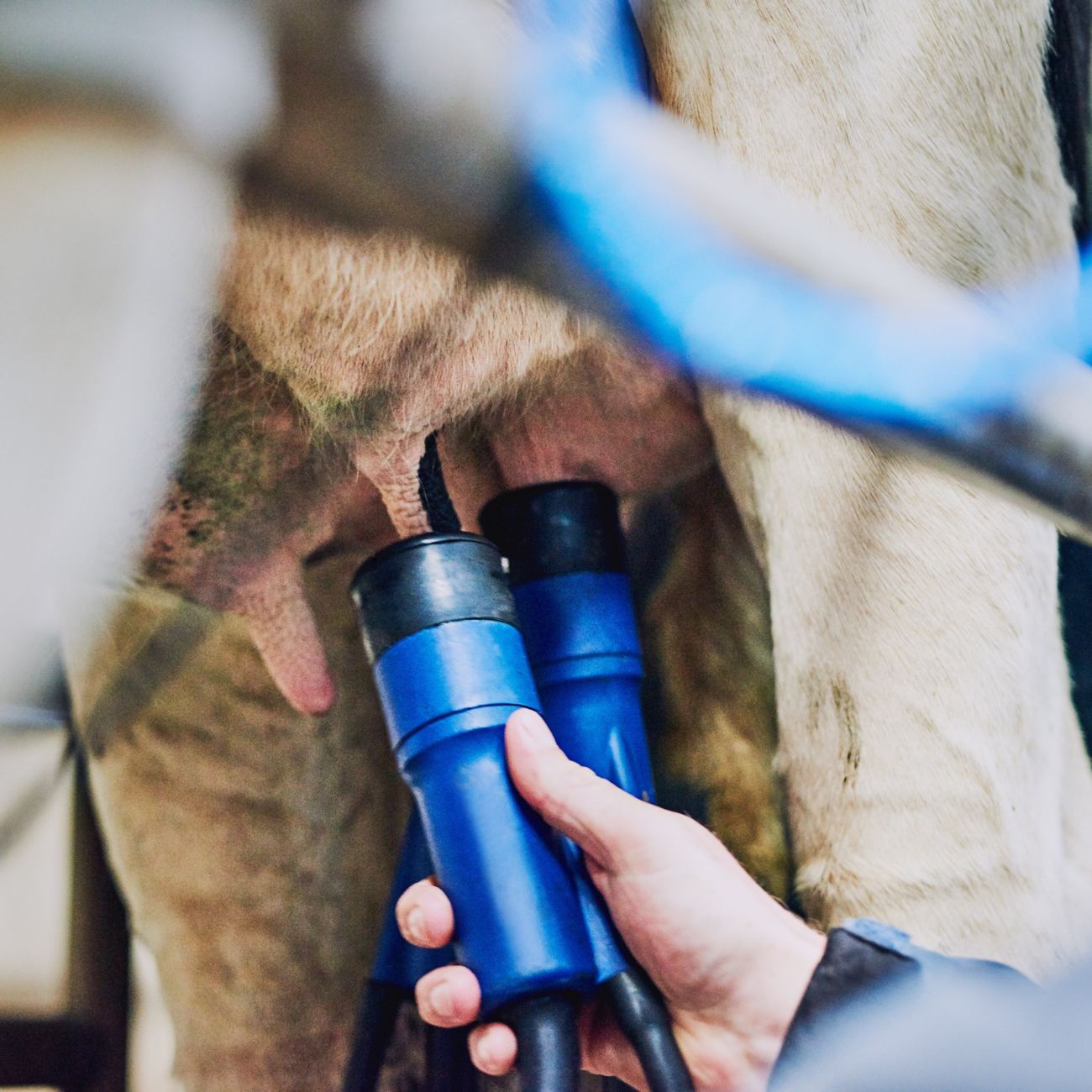
Dry-off is the end of lactation: you stop milking the cow so the udder can rest. There are two reasons to dry off: by gestation, about 60 days before the expected calving date, and by time in milk, when the lactation has reached the maximum number of days set for the herd.
What dry-off is and why it matters
During the dry period, the udder tissue regenerates and the cow rebuilds reserves for calving and the next lactation. It isn't lost time: it is the groundwork for the next round of production.
A poorly managed dry period is paid for later, with less milk in the next lactation and more problems around calving.
When to dry off
A cow can reach dry-off by two different routes, and it pays to watch both:
The second criterion covers cows that aren't pregnant or that conceived late. Without it, they would stay in the milking string indefinitely, producing less and less. That is why a cow may need to be dried off even if she isn't pregnant or even if she is still more than 60 days from calving.
A cow conceives to the service on April 20.
Expected calving date: January 28 of the following year.
Dry-off date by gestation: November 29.
The udder doesn't have time to recover.
The most widely used range in dairy.
Days without production and a risk of overconditioning.
How to dry off, step by step
- Confirm the date. Check the service date and the pregnancy diagnosis.
- Check the udder before drying off. A CMT helps you decide how to manage each cow.
- Bring production down if needed. For cows still giving a lot of milk, concentrate is usually cut back a few days beforehand.
- Stop milking. Dry-off can be abrupt or gradual, depending on production and technical judgment.
- Follow the health protocol your veterinarian prescribes.
- Watch the udder for the first few days and move the cow to the dry group.
- Record the dry-off date. Without it, you can't measure the dry period.
Common mistakes
- Drying off without a reliable calving date. You end up with dry periods that are too short or too long.
- Not checking the udder first. Infections carry over into the next lactation.
- Neglecting the dry cow's feeding. Reaching calving too thin or too fat brings problems.
- Leaving the dry cow with the milking cows. She needs different management and a different diet.
- Not recording the dry-off. The event is lost, and with it the chance to improve.
Frequently asked questions
How long should the dry period last?
45 to 60 days is the most widely used range. Fewer than 40 days usually hurts the next lactation.
Abrupt or gradual dry-off?
It depends on how much milk the cow is giving and on your advisor's recommendation. With high-producing cows, dry-off is usually prepared a few days ahead.
What if the cow dries herself off early?
Record the date anyway and look into the cause: it may be a very long lactation due to high days open.
Should I dry off a cow that isn't pregnant?
Yes, if she has passed the maximum time in milk you set. A lactation that drags on too long yields less and less, and usually points to a reproductive problem worth looking into.
How do I know which cows are due for dry-off?
With two dates per cow: dry-off by gestation, subtracting 60 days from the expected calving date, and dry-off by time in milk, adding the maximum number of days to the last calving. Whichever comes first wins.
Related terms
This guide is for informational purposes and uses general benchmarks. Each operation's targets and treatments should be set with its veterinarian or advisor.