
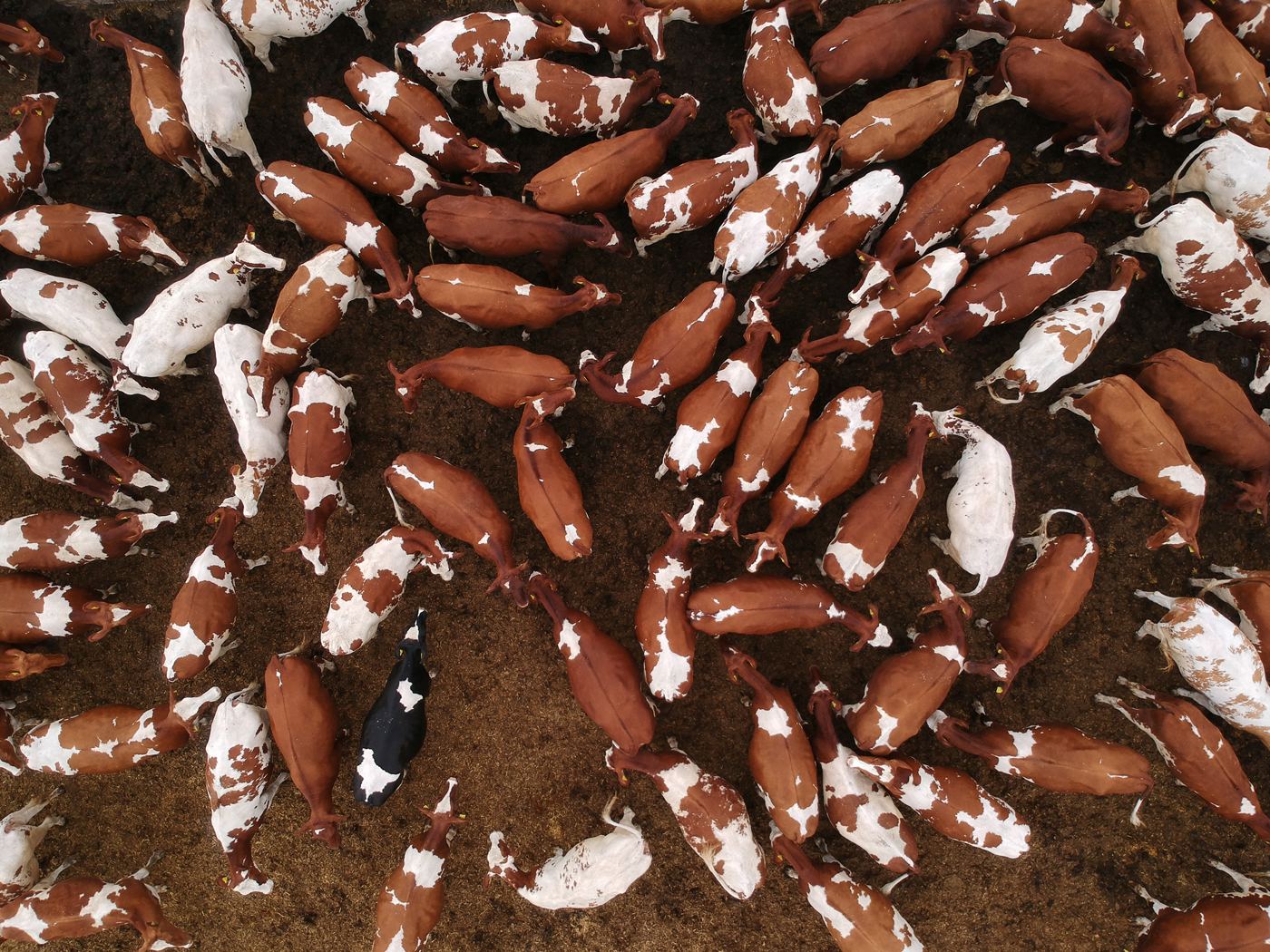
Stocking rate is the number of animals managed per hectare, usually expressed in animal units (AU/ha). The right stocking rate is the one the available pasture can support: you estimate it by measuring the forage and dividing it by what the cattle eat.
What stocking rate is
It is the relationship between the cattle and the land that feeds them. To compare animals of different sizes, we use the animal unit (AU): a reference animal, usually a mature cow weighing about 450 kg live weight. The reference weight varies by country, so check which one is used in your area.
There are two concepts that shouldn't be confused:
- Stocking rate: the animals you have per hectare today.
- Carrying capacity: the animals the pasture can support without degrading.
The goal is to keep the first from exceeding the second.
How it is calculated
A 4-hectare paddock has a pasture measurement of 2,400 kg of dry matter per hectare.
With a 70% utilization factor, usable forage is 1,680 kg per hectare: 6,720 kg in total.
A 450 kg animal unit eats about 13.5 kg of dry matter per day.
For a group of 40 AU: 6,720 ÷ (40 × 13.5) = about 12 grazing days.
Intake is estimated at 2.5% to 3% of live weight in dry matter per day. Utilization depends on the system: it is usually higher under well-managed rotational grazing than under continuous grazing.
Signs the stocking rate is off
Very short grass, bare soil, weeds, and animals losing condition.
Overmature grass, a lot of refusal, and wasted forage.
The pasture recovers between grazings and the cattle hold their condition.
How to adjust it through the year
Grass doesn't grow the same all year, so the stocking rate can't be fixed either.
- Measure your pasture often. A pasture measurement before each grazing keeps you from deciding by eye.
- Respect rest periods. The paddock needs time to recover, and that time is longer in the dry or cold season.
- Plan for the lean season. Silage, hay, or supplements, or a scheduled herd reduction.
- Put the weather to work. Rainfall and temperature tell you in advance how much the grass will grow.
Frequently asked questions
How much does an animal unit weigh?
It depends on each country's convention. A mature cow of about 450 kg is common; some places use 400 or 500 kg.
What is a pasture measurement?
It is the measurement of the forage available in a paddock, usually in kilograms of dry matter per hectare. It is the starting point for calculating stocking rate.
What utilization rate should I use?
It varies with the forage and the management. Working with 50% to 70% is common; the right approach is to adjust it based on what you see in your own paddocks.
Are stocking rate and grazing pressure the same thing?
No. Stocking rate relates animals to land area; grazing pressure relates animals to the forage available at a given moment.
Related terms
This guide is for informational purposes and uses general benchmarks. Each operation's targets and treatments should be set with its veterinarian or advisor.