
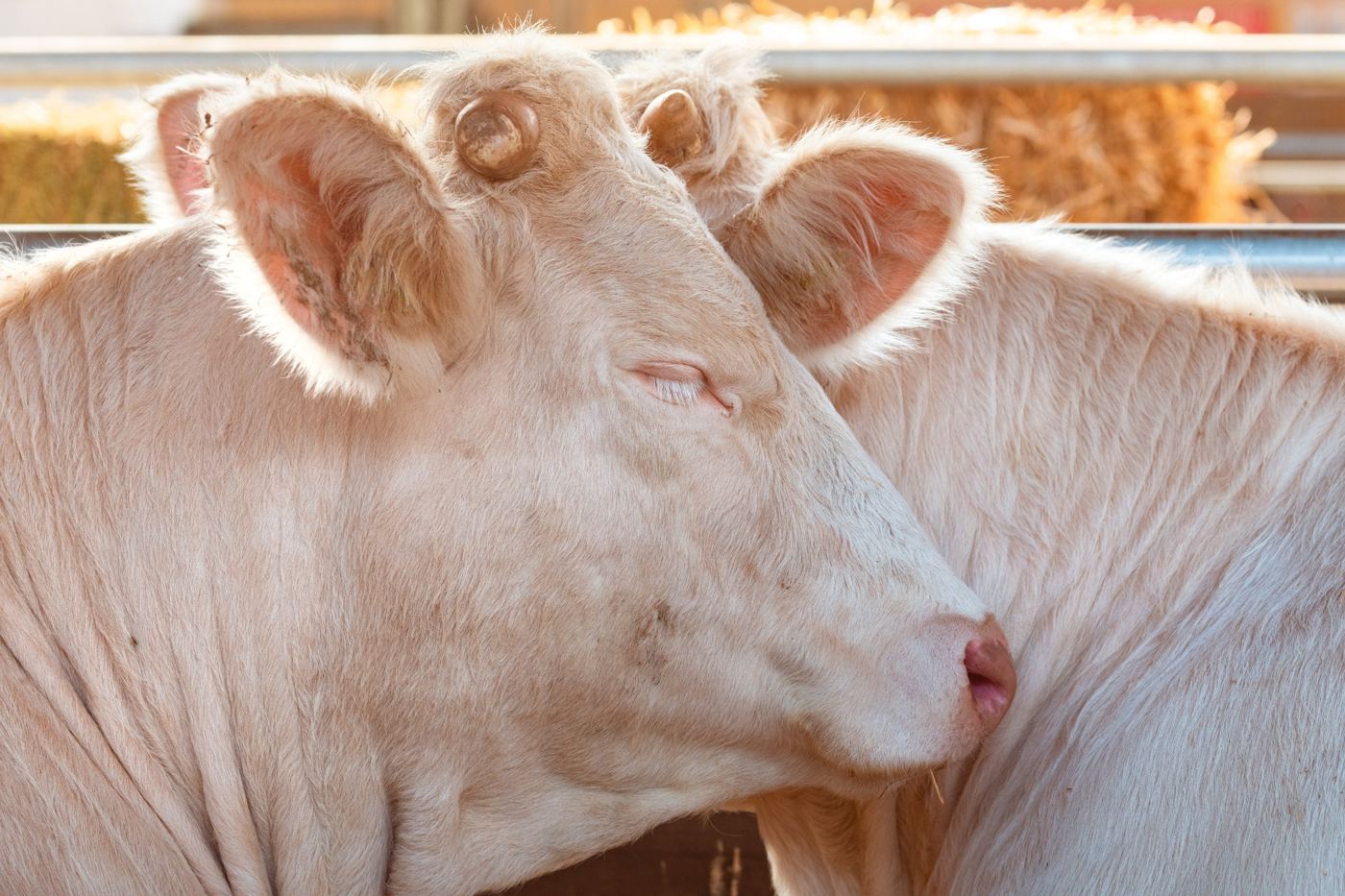
Heat stress sets in when the cow can't shed the heat she builds up. It is measured with THI, an index that combines temperature and humidity. In dairy cows, production starts to drop at a THI of 68.
What heat stress is
A cow generates a lot of heat digesting feed and making milk. When conditions are hot and humid, she struggles to get rid of it: she eats less, produces less, and reproduces poorly.
Humidity matters as much as temperature, because it makes it harder for the animal to cool off by breathing and sweating. That is why a mild but very humid day can be tougher than a hot, dry one.
How THI is calculated
The temperature is 30 °C and relative humidity is 70%.
THI = 86 − 0.165 × 28 = 81.
That is a severe stress level for a dairy cow.
There are several THI formulas that give similar results. What matters is always using the same one so you can compare one day with another.
How to read the value
Common benchmarks for dairy cows:
The cow is in her comfort zone.
Intake drops and milk starts to fall.
Sharp drop in production and a health risk.
High-producing cows are more sensitive. Beef cattle and tropically adapted breeds tolerate higher values.
How to spot it in your animals
- Rapid breathing and open-mouth panting.
- They bunch up in the shade or around water.
- They eat less, especially during the hottest hours.
- Milk production drops one or two days later.
- Shorter, harder-to-spot heats, and lower conception.
What to do
- Enough shade for every animal, natural or artificial.
- Clean, cool water close by: intake rises sharply in the heat.
- Shift the schedule. Grazing, milking, and handling during the coolest hours.
- Fans and sprinklers in holding pens, feed bunks, and corrals, if your system allows it.
- Adjust feeding with your nutritionist, offering more feed in the afternoon and at night.
- Get ahead with the forecast. You can prepare for critical days in advance.
Frequently asked questions
What does THI stand for?
It stands for temperature-humidity index. It sums up in one number how demanding the environment is for cattle.
At what THI does heat stress begin?
In high-producing dairy cows, from 68. Other classes and breeds tolerate somewhat higher values.
Does heat stress affect reproduction?
Yes. It reduces heat expression and conception rate, and its effects can last for weeks after the heat wave.
Does nighttime temperature matter?
A great deal. If the night doesn't cool down, the cow can't recover and the stress builds from one day to the next.
Related terms
This guide is for informational purposes and uses general benchmarks. Each operation's targets and treatments should be set with its veterinarian or advisor.