
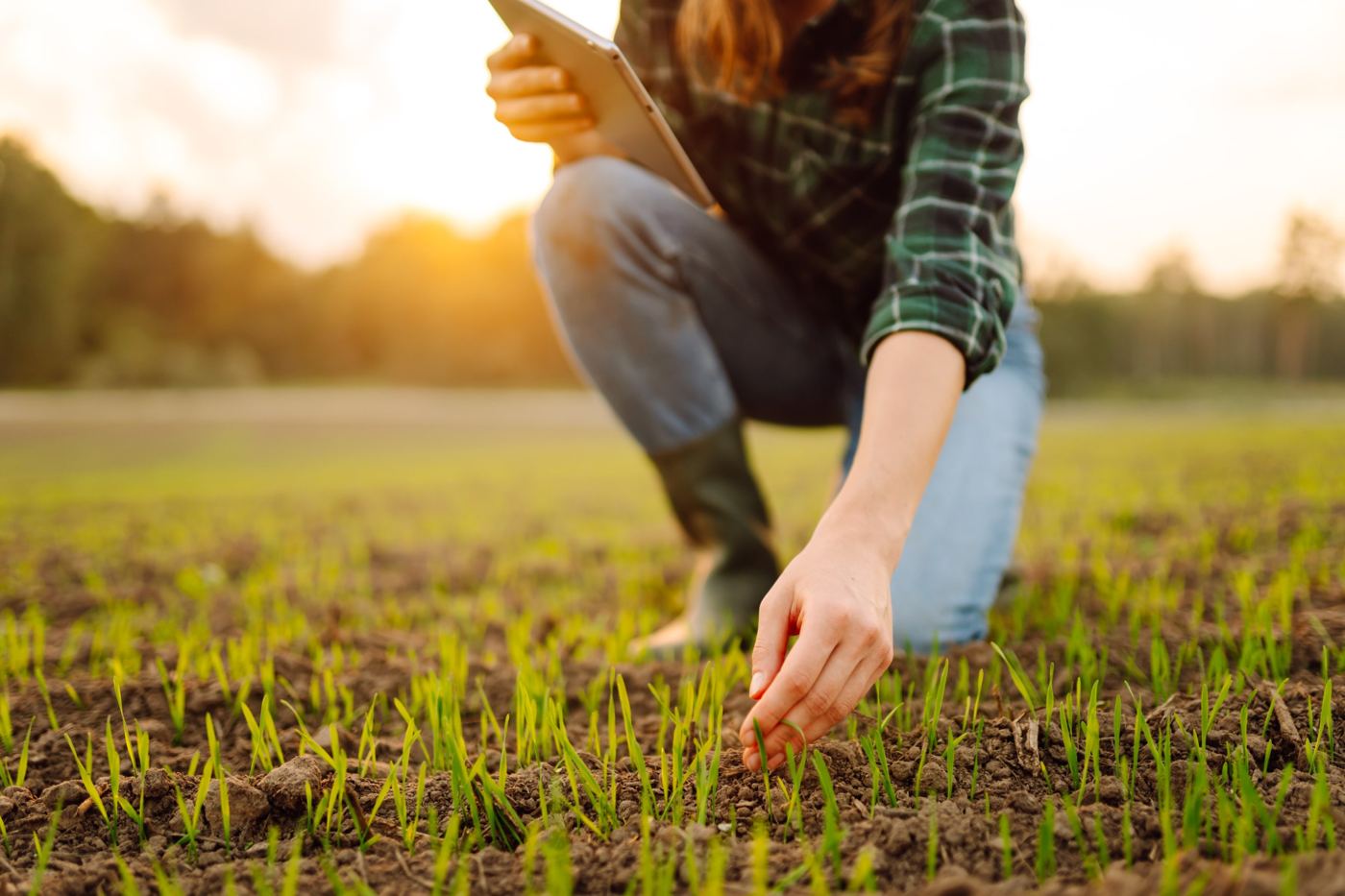
A pasture measurement is the measurement of the forage in a paddock, expressed in kilograms of dry matter per hectare. It is done by cutting and weighing samples from a known area, and it tells you when to start grazing, for how many days, and with how many animals.
What a pasture measurement is and what it's for
Measuring means you stop estimating pasture by eye. With one number per paddock, you can plan your grazing instead of reacting once the grass has run short or gone overmature.
- Before going in: how much forage there is and how many days it will last.
- On the way out: how much was left, known as the residual.
- Between one measurement and the next: how fast the grass is growing.
How to do it, step by step
The cut-and-weigh method is the most direct and doesn't require expensive equipment:
- Walk the paddock in a zigzag and pick spots that represent its overall condition: neither the best nor the worst.
- Lay down a frame of known area, for example 0.25 m² (50 × 50 cm).
- Cut the grass inside the frame at the height the cattle would leave it.
- Weigh the sample fresh.
- Repeat at several spots and take the average. The more samples, the more reliable the figure.
- Convert to dry matter using the forage's dry matter percentage.
How it is calculated
With a 0.25 m² frame, the samples average 0.30 kg fresh weight.
That equals 1.2 kg per square meter: 12,000 kg of fresh forage per hectare.
If the forage is 20% dry matter: 12,000 × 0.20 = 2,400 kg of dry matter per hectare.
Dry matter percentage changes with the species, the age of the forage, and the season. You can measure it by drying a sample, or use reference values for your area.
Two consecutive measurements give you the growth rate: how much the pasture increased divided by the days of rest.
Other methods
- Rising plate meter. It measures the compressed height of the sward and converts it to kilograms with an equation. It is fast, but it needs calibration.
- Ruler or height. It estimates forage from sward height. Simple and less precise.
- Visual estimate. Useful when you have experience and check it against real cuts from time to time.
- Satellite imagery. It lets you track many paddocks at once; it is best validated with field measurements.
When to measure
Sets grazing days and stocking rate.
Shows whether the paddock was overgrazed or undergrazed.
Tells you when the paddock is ready again.
You don't need to measure every paddock every week. What matters is always using the same method, so the numbers can be compared.
Frequently asked questions
How many samples should I take?
It depends on the size of the paddock and how uniform it is. Several well-spread samples give a much more reliable average than a single one.
What is dry matter?
What is left of the forage once the water is removed. It is used because it lets you compare forages with different moisture content.
How often should I measure?
At a minimum, before each grazing. In periods of fast growth, it is worth doing more often.
Why measure the residual?
The difference between the pre-grazing measurement and the residual is what the cattle ate. It also shows whether the paddock was left with enough grass to regrow.
Related terms
This guide is for informational purposes and uses general benchmarks. Each operation's targets and treatments should be set with its veterinarian or advisor.